Plug & play
Your repaired original keeps its factory programming — just reinstall and bleed the brakes. No dealer HDS, no neutral-position relearn.
ABS light on? VSA and traction control disabled? We repair the Honda/Acura ABS/VSA modulator-control unit at board level — failed relays, cracked solder joints, pressure-sensor circuits — and return your original VIN-matched unit. No programming required. Mail-in from anywhere in Canada.
The Honda/Acura ABS/VSA modulator is a network gateway for several systems — so when it fails, multiple warning lights usually appear at once.
Not every code means the module is dead. Here's how the common Honda/Acura codes break down.
| Code | Meaning | What it means for the module |
|---|---|---|
| U0121 | Lost communication with ABS module | Module Strong module indicator |
| 85-01 | VSA system problem | Module Usually internal |
| 81-01 / 81-11 | Modulator internal circuit | Module Failed module |
| 66-01 / 66-13 | Brake pressure sensor | Module Internal fault — classic CR-V / Element |
| 121-11 / 122-11 & 31-11–38-11 | Solenoid valve malfunction | Module Internal driver fault |
| 53-01 / 53-11 | Pump motor relay | Module Internal relay driver |
| 51-01 | Pump motor malfunction | Module Module or pump |
| 61-01 / 61-11 / 62-xx | Low voltage | Not the module Check battery / grounds FIRST |
| 84-01 / 84-21 | Sensor neutral position | Not the module Calibration — usually NOT the module |
| C0031 / C0034 / C0037 / C0040 | Wheel speed sensors | Not the module Usually sensor / wiring — NOT the module |
Honest note: voltage codes (61/62), sensor neutral-position codes (84) and wheel-speed codes (C003x) often mean it's not the module — check the battery, grounds, calibration and sensors first. If it's one of the internal codes above, that's exactly what we repair.
A new or used Honda modulator requires VIN programming and VSA sensor neutral-position memorization at the dealer. A repaired original is plug-and-play.
Your repaired original keeps its factory programming — just reinstall and bleed the brakes. No dealer HDS, no neutral-position relearn.
24–72 hours in-shop; roughly 5–7 business days total for mail-in including shipping both ways.
Versus $1,200–$2,500 for a dealer replacement with part, labour and programming on top.
The signature Honda failure — solenoid wire-to-board joints fatigue and crack, throwing all the dash lights at once. We rework them with higher-grade solder.
Code 66-01 on CR-V and Element — internal brake-pressure sensor circuits tested and restored to spec.
Codes 51-xx / 53-xx — burned relay and driver circuits desoldered and replaced for extended service life.
Codes 31-11–38-11 — per-channel valve drivers tested individually and rebuilt to restore full ABS operation.
Code U0121 — failed CAN transceiver repaired so your scanner and network can reach the module again.
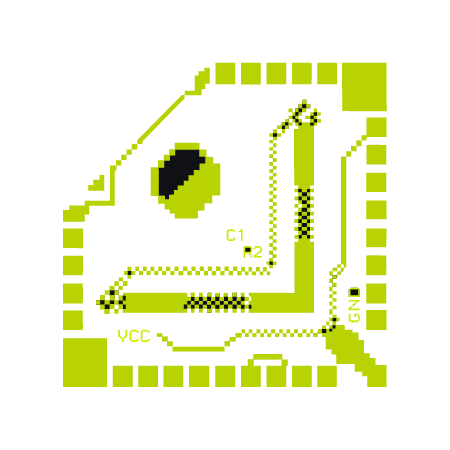
Moisture damage cleaned under magnification, traces rebuilt, and conformal coating applied against future intrusion.
Don't see your exact year? Send us your part number or fault code — we very likely cover it.
Request your free quote with your Honda's year, model and codes. We reply fast with pricing and shipping instructions.
Remove your modulator, pack it securely and mail it to our certified Calgary facility.
Board-level diagnosis, precision repair of the failed components, and full functional testing.
Return shipping with documentation. Reinstall, bleed the brakes and drive — no coding required.
In most cases it can be repaired. The common Honda failure — cracked internal solder joints between the solenoid wires and the control board — is a board-level repair, not a reason to buy a $1,200–$2,500 unit. We restore your original and return it plug-and-play.
No. A weak battery, poor grounds, or wheel speed sensors can trigger the same lights. That's why we publish the code table above — check the cheap causes first. If it's an internal relay, solenoid, pressure-sensor or comms code, the modulator is the culprit.
No. Because we repair your original unit, it keeps its VIN programming and VSA calibration. A new or used modulator would need dealer programming plus a VSA sensor neutral-position memorization — a repaired original does not.
Honda/Acura ABS/VSA modulator repair starts from $250, with a free quote first. Compare that to $1,200–$2,500 for a dealer replacement including part, labour and programming.
24–72 hours in-shop once we receive it. For mail-in customers, total turnaround including shipping both ways is typically 5–7 business days.
Your standard brakes still work, but ABS, VSA and traction control are disabled — most dangerous on wet or icy roads. If you have a soft or low brake pedal, don't drive it; get it inspected right away.
On modern Hondas they're the same combined assembly — a hydraulic modulator (pump + solenoid valves) with the electronic control unit built on top. We repair the electronic control portion.
Our repair addresses the electronic control module and its circuits (relays, drivers, sensors, comms). Purely mechanical hydraulic-pump failures are diagnosed case-by-case — we'll tell you honestly if the hydraulic unit itself is at fault.
That's a separate issue. Transport Canada recall 2010-079 (NHTSA 10V-098 in the U.S., March 2010) covered model-year 2007–2008 Odyssey and Element vehicles, where air could enter the VSA modulator during the self-check and cause a soft or low brake pedal. That's a mechanical air-intrusion recall, distinct from the later electronic solder-joint/relay/sensor failures we repair.
Yes — we accept mail-in modules from anywhere in Canada, with typical total turnaround of 5–7 business days.
Twenty years of trust, thousands of repairs, one simple belief: fix it right, save you money, and get you back on the road with confidence.
✔ AMVIC-Licensed · Calgary, AB · 20+ Years · Thousands of Repairs
Tell us about your Honda or Acura and the symptoms. We'll send pricing and shipping instructions — no obligation.
Request sent — thank you!
We'll reply with pricing and shipping instructions shortly.